Go to text Go to main menu
scroll

알파셀인터내셔널 - Alphacell International Co., Ltd.

“ We provide
the best solutions from cell selection

to the production of battery pack ”

About Us

PRODUCT

Secondary Battery

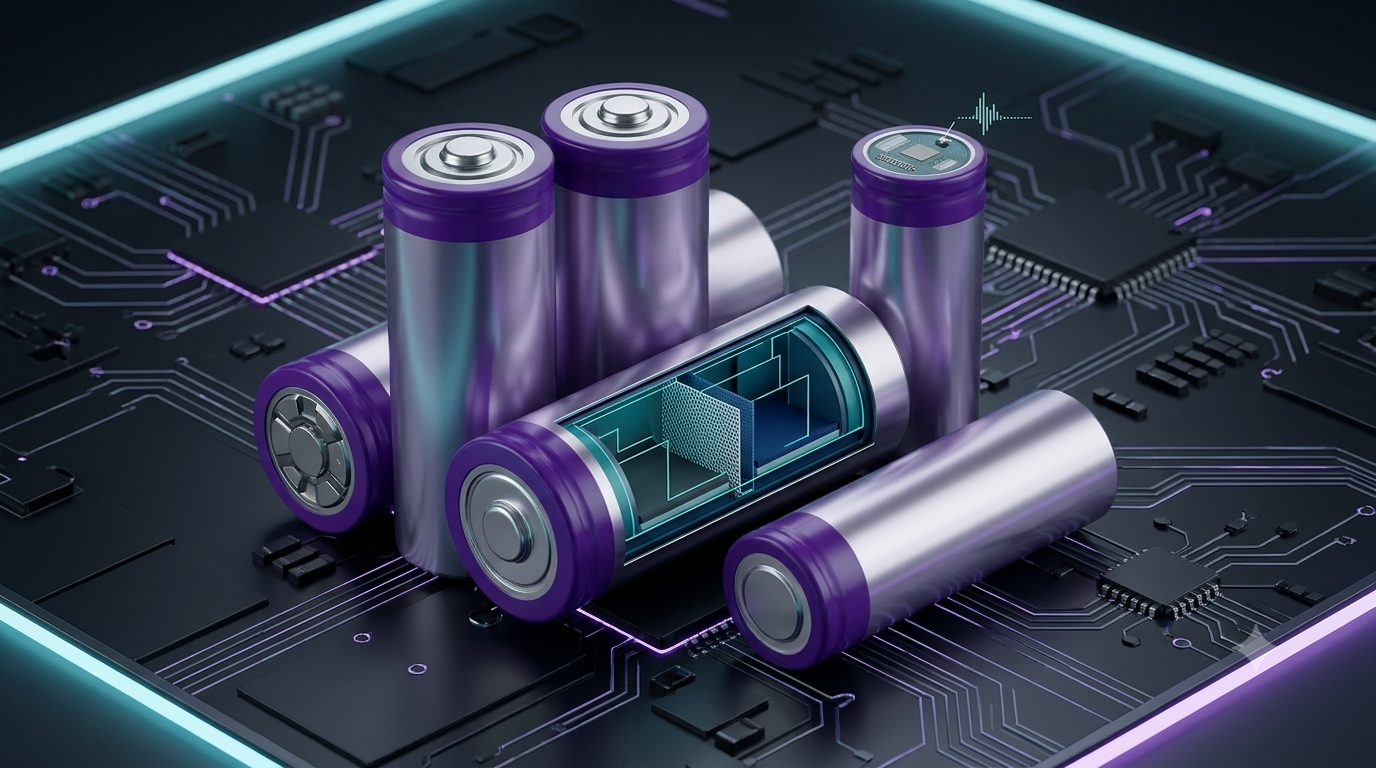
We provide the best services by procuring batteries from various domestic and foreign battery manufacturers and providing stable business support and technical verification for the entire process from research and development to cell selection and quality verification.

More Products
  • Li-ion
  • LFP
  • Sodium-ion
  • Lithium

PRODUCT

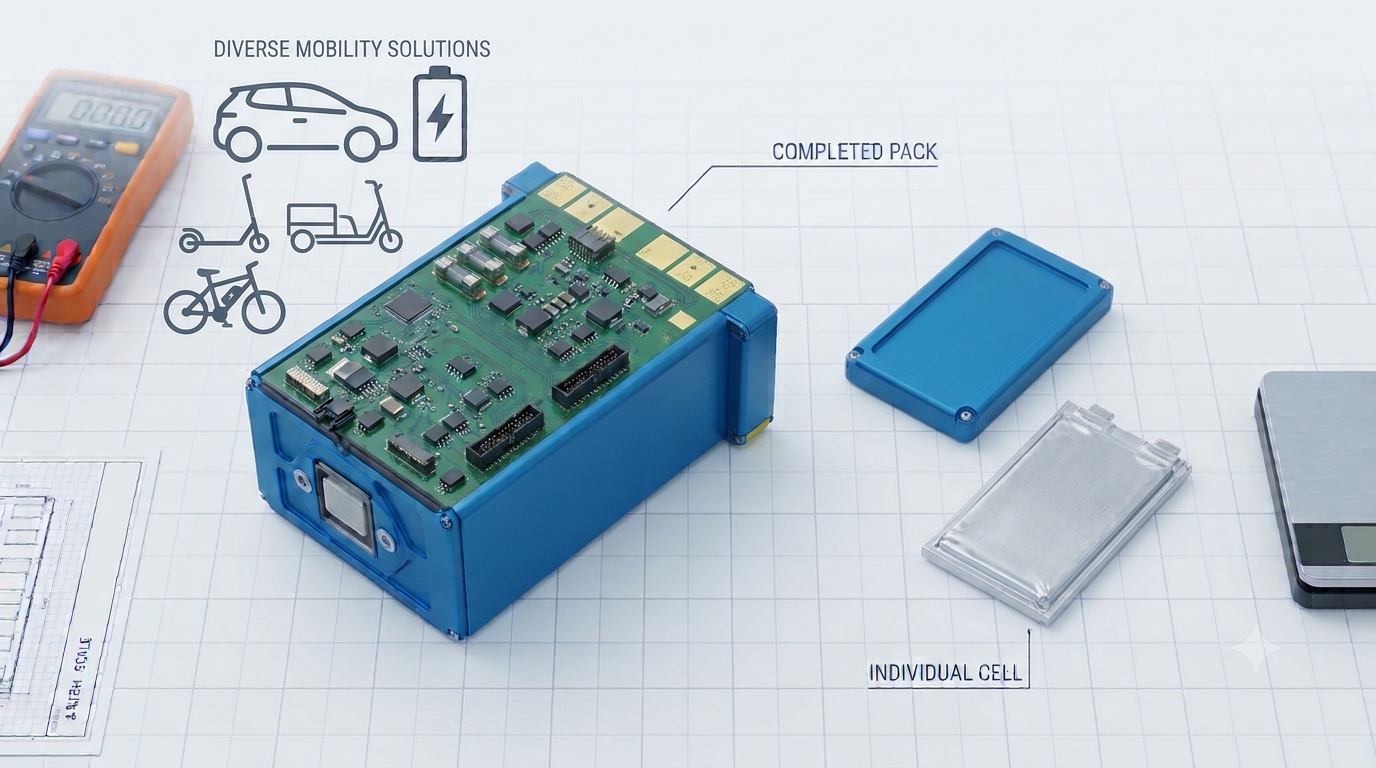
Battery Pack

We propose integrated solutions tailored to the intended uses of
the products being developed, from cell selection to production of nickel,
casing, BMS, and soft pack and hard pack, and also provide support
with various international certifications and reliability verification.

More Products
  • Li-ion
  • LFP
  • Lithium

TEST

QUALITY TEST

We verify the charging and discharging characteristics of cells at high and low temperatures as well as perform various reliability verifications of battery packs, and conduct strict quality inspection before shipment of the products.

Equipments

NEWS

NEWS

Read News
Batteries for Massage Guns and Beauty Devices: Compact Design, Power Output, and Safety Consideratio
2026.11.04 General
Batteries for Massage Guns and Beauty Devices: Compact Design, Power Output, and Safety Consideratio
As the market for personal healthcare and beauty devices continues to expand, products such as massage guns, RF beauty devices, LED masks, and portable skincare devices are becoming increasingly common. This has also increased the importance of battery pack design in these applications.Since these products are typically handheld or used in direct contact with the skin, battery size and weight must be considered alongside power output, heat generation, and safety.AlphaCell International reviews battery pack requirements for compact healthcare and beauty devices, considering product usage and internal structure when evaluating cell selection, battery pack configuration, protection circuits, and charging conditions.In this article, we introduce the key characteristics of batteries used in massage guns, beauty devices, auxiliary power systems, and backup applications, along with important design considerations throughout the battery pack development process.1. Massage Guns: High Power Output in a Compact StructureMassage guns use internal motors to move the massage head back and forth at high speeds, delivering vibration and percussion to muscles.As the intensity increases or greater pressure is applied to the massage head, motor load increases, resulting in higher instantaneous discharge current requirements from the battery.At the same time, batteries are often installed inside the handle, which places restrictions on cell size and arrangement.During battery pack development, the following factors are reviewed:- Discharge current requirements for each operating intensity mode- Peak current requirements according to motor load- Cell type and arrangement suitable for the internal handle space- Battery and motor heat generation during continuous operation- Cell fixation and insulation structures designed to withstand vibration and external impact- Target operating time and charging timeMassage guns require careful consideration of both instantaneous power demand and heat generation during extended operation.Rather than selecting a battery based solely on rated capacity,cell discharge performance, internal resistance, and actual operating conditions should be evaluated together.2. Beauty Devices: Slim and Lightweight Design with Temperature ManagementRF, LED, and low-frequency beauty devices, as well as portable skincare devices, generally place greater emphasis on product thickness, weight, operating time, and stable power supply rather than high instantaneous output.Depending on the internal space and external design, compact pouch cells or cylindrical cells can be considered for these applications.Key battery pack design considerations include:- Cell dimensions suitable for product thickness and design- Target operating time and battery capacity- Temperature rise during charging and operation- Thermal management between the battery and skin-contact areas- Charging circuit configuration according to input methods, such as USB charging- Protection functions against overcharge, over-discharge, and abnormal temperaturesFor products that come into direct contact with the skin, heat generated by the battery and internal circuits can affect the product's surface temperature.Therefore, it is important to evaluate not only the cell's heat generation characteristics but also its internal placement and heat transfer structure within the product.3. Auxiliary Power and Backup Batteries: Maintaining Long-Term Power AvailabilitySome compact healthcare devices, medical equipment, and electronic products use auxiliary power sources or backup batteries in addition to their main power supply.Depending on the intended application, backup batteries may be used to retain internal clock settings and configuration data when the main power is disconnected, or to support continued device operation for a certain period in the event of a main power failure.Unlike conventional operating batteries, these batteries often need to maintain their functionality over extended standby periods.During development, the following factors are reviewed:- Purpose of the backup power source and required backup duration- Self-discharge characteristics and remaining capacity during extended standby- Power switching methods between the main and backup power sources- Power consumption in standby mode- Long-term storage and charging conditions- Cell dimensions and configuration suitable for the product's internal spaceIn particular, memory backup batteries and emergency operating batteries have different capacity and output requirements.Therefore, the target backup circuit and expected operating time must first be identified before selecting suitable cells and protection circuit configurations.4. Battery Pack Development: From Initial Review to Production PreparationBattery packs for compact healthcare and beauty devices are developed through several stages, taking into account the product's external design, internal structure, and operating environment.① Initial Requirements and Operating Environment AnalysisDuring the initial development stage, battery requirements are defined based on the product's main functions and intended usage.- Product type and primary operating method- Target voltage and required capacity- Normal operating current and maximum load current- Target operating time and charging time- Battery installation space and dimensional requirements- Operating environment and expected temperature rangeFor massage guns, motor load and instantaneous discharge current are key considerations.For beauty devices, product thickness, operating time, and surface temperature are given greater attention.For products requiring backup power, the intended backup function and required standby duration are reviewed separately.② Cell Selection and Battery Pack ConfigurationCandidate cells are compared based on capacity, discharge performance, internal resistance, dimensions, weight, and supply conditions.The series configuration is reviewed according to the target voltage, while the parallel configuration is determined based on the required capacity and discharge performance.Cylindrical and pouch cells are also evaluated according to their structural characteristics and suitability for the available internal space.Even cells with the same rated capacity can differ in dimensions and shape, affecting battery pack layout and the product's internal design.For this reason, it is beneficial to review cell selection and structural design together from the early product design stage.③ Protection Circuit and Charging Condition ReviewTo ensure stable battery operation, protection functions against overcharge, over-discharge, overcurrent, short circuits, and abnormal temperatures are reviewed.The charging circuit is designed according to the cell's allowable charging voltage and current.For products using various input methods, such as USB charging, charging stability under different input power conditions must also be evaluated.In addition, temperature sensing locations and protection settings are reviewed according to the product's operating environment and internal structure.④ Certification and Safety RequirementsHealthcare and beauty devices may be subject to different certification and safety requirements depending on their intended use and product classification.For products distributed in Korea, applicable KC requirements for the battery pack and finished product should be identified separately.UN 38.3 testing requirements for lithium battery transportation should also be reviewed according to the product's supply and transportation plans.⑤ Production Preparation and Quality ReviewBefore mass production, the battery pack assembly structure, cell fixation, insulation, wiring layout, and connection stability are reviewed.In particular, compact battery packs contain densely arranged components within limited spaces, making detailed assembly conditions such as tab welding, insulation, and cell protection structures especially important.Key inspection items and assembly conditions should be established to maintain the quality standards verified during the prototype stage throughout mass production.5. Key Considerations During the Development ProcessBattery pack development for compact healthcare devices involves various technical considerations depending on product size and usage patterns.Heat Management During High-Intensity OperationWhen massage guns operate at high intensity for extended periods, heat generated by the battery and motor can accumulate inside the product.In addition to individual cell performance, battery and motor placement, heat transfer paths,and temperature protection conditions must be considered together.Selecting Cell Dimensions Suitable for Product DesignFor slim beauty devices, finding cells that fit the product's design is particularly important.Standard cells generally offer advantages in terms of availability and production schedules,but their dimensions may not perfectly match the product design.Custom-sized pouch cells can provide better space utilization,but minimum order quantities and supply lead times must also be considered.Therefore, product design, capacity, supply conditions, and development schedules should be evaluated together.Temperature Management When Using Devices Immediately After ChargingProducts that come into contact with the skin are sometimes used immediately after charging.Charging current and temperature protection conditions should be configured according to the product's characteristics to prevent heat generated during charging from affecting the device's temperature when operation begins.Long-Term Reliability of Backup BatteriesAlthough backup batteries may be used infrequently under normal conditions, they must operate properly when needed.In addition to initial capacity, self-discharge characteristics, storage conditions, and expected service life should be considered when selecting suitable cells and power management configurations.ConclusionAlthough massage guns, beauty devices, and compact healthcare products are relatively small, their battery requirements vary depending on their intended applications. Output, capacity, weight, heat generation, and safety must all be considered during battery pack development.Auxiliary power systems and backup batteries also require different design considerations from conventional operating batteries, particularly in terms of standby life and power retention.AlphaCell International supports the overall battery pack development process, from initial specification review and cell selection to battery pack configuration, protection circuits, charging conditions, safety requirement reviews, and production preparation,based on each product's operating environment and structural requirements.If you are considering battery pack development, please share information such as product dimensions, required power output, target operating time, and available installation space. We will be happy to review suitable cells and battery pack configurations for your application.Please feel free to contact us via Contact Us or at support@alphacell.co.kr.Thank you.#MassageGunBattery #BeautyDeviceBattery #PouchCell #HealthcareDevice #BackupBattery #AuxiliaryPower #CompactBatteryPack #KCCertification #UN38.3 #AlphaCellInternational
Vacuum Cleaner Batteries: Different Selection Criteria for Cordless Stick and Robot Vacuums
2026.11.03 General
Vacuum Cleaner Batteries: Different Selection Criteria for Cordless Stick and Robot Vacuums
Household cleaning appliances have rapidly shifted from corded to cordless models and robot vacuums that clean autonomously have also become increasingly common.Although both types are designed for cleaning, cordless stick vacuums androbot vacuums have different battery requirements due to their distinct operating methods and usage environments.AlphaCell International supports battery pack development for household cleaning appliances from the initial review stage, considering product requirements and operating conditions to evaluate cell selection, battery pack configuration, protection circuits, and charging conditions.In this article, we explore the key differences between cordless stick vacuums and robot vacuums, along with important battery selection criteria and design considerations throughout the development process.1. Cordless Stick Vacuums: Strong Suction Power and Lightweight DesignCordless handheld and stick vacuums use high-speed motors to generate strong suction power. In particular, maximum-power modes require high discharge current from the battery.At the same time, since users carry and operate these products directly, battery weight and size are also important. In addition to output and runtime, the overall product weight and center of gravity must be considered.During the initial development stage, the following requirements are reviewed:- Discharge current required in maximum suction mode- Power consumption and target runtime in standard and high-power modes- Available battery pack dimensions and weight- Replaceable battery configuration and mounting structure- Charging method and charging timeBecause power consumption varies significantly depending on the suction mode, cell discharge performance and battery pack capacity must be evaluated based on actual usage patterns for each operating mode.2. Robot Vacuums: Operating Time and Repeated Charging ConditionsRobot vacuums operate multiple components simultaneously, including suction motors, drive motors, and brushes. Therefore, battery capacity and output must be designed with consideration for the cleaning area,operating time, and driving and suction conditions.Robot vacuums also return to their charging docks after cleaning resulting in repeated charging and discharging cycles.For this reason, factors such as cycle life, charging conditions, temperature management andprotection functions are just as important as cell capacity.During the initial review, the following factors should be considered:- Target cleaning area and operating time- Power consumption under different suction and driving conditions- Cell cycle-life characteristics under repeated charge and discharge- Protection functions suitable for automatic charging environments- Battery pack dimensions compatible with the product's internal structure and height- Charging current and temperature management during chargingSince users do not usually manage the charging process directly, the cells, protection circuits, and charging conditions must be evaluated together to ensure stable operation in an automatic charging environment.3. Battery Pack Development: From Initial Review to Production PreparationCordless stick vacuums and robot vacuums have different product structures and usage patterns.Therefore, the characteristics of the target product must be clearly understood from the earliest stages of battery pack development.① Initial Requirements and Usage Environment AnalysisAt the beginning of development, the product's intended use and operating conditions are reviewed.- Product type and primary operating method- Target voltage and required capacity- Normal operating current and maximum load current- Target runtime and charging time- Battery pack installation space and dimensional requirementsFor cordless stick vacuums, AlphaCell reviews power consumption and usage ratios for each suction mode.For robot vacuums, the cleaning area and driving and suction conditions are used as the basis for defining requirements.Since the starting points differ by product type, the initial review items also vary.② Cell Selection and Battery Pack ConfigurationCandidate cells are evaluated based on capacity, discharge performance, internal resistance, and cycle life.The series configuration is reviewed to meet the target voltage, while the parallel configuration is determined according to the required capacity. Battery pack dimensions and weight must also be considered in relation to the available space inside the product.Rather than selecting a cell based on a single specification, AlphaCell compares two to three candidate cells in terms of performance, dimensions, and supply conditions.Since the internal space of cleaning appliances is often limited, even a difference of a few millimeters in cell dimensions can affect the overall battery pack layout.③ Protection Circuit and Charging Condition ReviewFor stable battery pack operation, the key functions of the BMS and protection circuits must be reviewed.Protection against overcharge, over-discharge, overcurrent, short circuits, and abnormal temperature increases must be suitable for the product's actual operating conditions.Charging conditions are also evaluated based on the cell's allowable charging voltage and current, as well as temperature increases during charging.For products such as robot vacuums that undergo repeated automatic charging, the charging environment and usage cycle must be considered together.④ Certification and Safety RequirementsSince these products are used in household environments, applicable safety requirements should be reviewed from the early development stage.For products distributed in Korea, the applicability of KC safety requirements andrelevant test items should be checked separately for the battery pack and the finished product.UN 38.3 testing requirements for lithium battery transportation should also be reviewed.⑤ Production Preparation and Quality ReviewBefore moving into production, the battery pack assembly structure,cell fixation, insulation and wiring layout, and connection stability should be checked.It is important to verify whether the selected cell arrangement can be maintained reliably during actual assembly within the product's limited internal space.Key inspection items and production conditions should also be established.Preparing consistent assembly and inspection standards helps ensurethat the performance verified during the prototype stage can be maintained throughout production. 4. Common Challenges in the Development ProcessThe challenges encountered during vacuum cleaner battery pack development vary depending on the product's usage patterns and internal structure.Actual Runtime Falling Short of ExpectationsThe runtime calculated from a cell's rated capacity often differs from the actual operating time of the finished product.For cordless stick vacuums, even a slight increase in the use of high-power mode can significantly reduce runtime. For robot vacuums,power consumption increases in environments with higher driving resistance, such as carpets and thresholds.Therefore, battery capacity should be determined based on powerconsumption under different operating modes and usage environments to achieve more realistic runtime expectations.Battery Life Under Repeated Charging ConditionsRobot vacuums repeatedly charge and discharge during normal use,often without users actively monitoring the process. Over time, this can lead to complaints about reduced cleaning time.It is therefore important to consider not only the cell's cycle lifebut also the charging voltage setting and how the battery is managed while the robot vacuum remains on its charging dock.These factors play an important role in maintaining battery life.Battery Pack Configuration Within Limited SpaceIn many cleaning appliances, the product's external design is determined before the battery pack is integrated.In cordless stick vacuums, battery placement directly affects the center of gravity and the strain placed on the user's wrist. In robot vacuums, height restrictions can limit the available cell arrangement options.Several layout options must be compared while considering available space, weight, and capacity together.Reviewing these challenges alongside the product's operatingenvironment and structural requirements from the early development stage can help reduce design changes and repeated testing.ConclusionBattery requirements vary depending on the type of cleaning appliance.Cordless stick vacuums prioritize output performance and weight, while robot vacuums require careful consideration of runtime and reliability under repeated charging conditions.AlphaCell International supports the overall battery pack development process, from initial requirements review and cell selection to battery pack configuration, protection circuit and charging condition evaluation, safety requirement reviews, and production preparation.If you are considering battery pack development for a cleaning appliance, suitable cells and battery pack configurations can be evaluated based on product type, target runtime, required voltage, and available installation space.Please feel free to contact us via Contact Us or support@alphacell.co.kr#CordlessVacuum #RobotVacuum #HomeApplianceBattery #BatteryPack#LithiumIonBattery #BatteryDevelopment #KCCertification #UN38.3#AlphaCellInternational
 Battery Packs for Cordless Power Tools: High-Output Cell Selection and Pack Design Considerations
2026.11.02 General
Battery Packs for Cordless Power Tools: High-Output Cell Selection and Pack Design Considerations
Cordless power tools such as drills, impact drivers, and grinders require high power output for short periods during operation.Unlike batteries used in general electronic devices, power tool batteries must deliver high current reliably and maintain performance under repeated high-load conditions.AlphaCell International Co., Ltd. reviews power tool battery pack development from the initial evaluation stage,covering key aspects at each stage of development, including product requirement analysis, cell selection, battery pack configuration and design, protection circuit evaluation, certification requirements, and production preparation.In this article, we introduce the key technical characteristics, cell selection criteria and design considerations involved in developing battery packs for cordless power tools.1. Output Performance Is the Key to Power Tool BatteriesPower tools require high current for short periods during motor operation.If the battery cells do not provide sufficient discharge performance, the voltage may drop significantly when a load is applied.This voltage drop can reduce tool output or trigger the battery protection circuit, causing the tool to stop operating.Therefore, when selecting cells for power tools, it is important to consider not only rated capacity but also the following factors:- Continuous Discharge Current: The current a cell can supply reliably over a specified period- Peak Discharge Current: The short-duration current required during motor startup or high-load operation- Internal Resistance: A factor affecting voltage drop and heat generation under load- Discharge Characteristics: Voltage stability and available capacity under actual operating current conditionsIn high-output power tools, cell discharge performance and internal resistance have a significant impact on product operating stability.2. From 18650 to 21700: Changes in Cell Selection18650 cylindrical cells have been widely used in power tool battery packs for many years.More recently, the use of 21700 cells has also expanded.Because 21700 cells are larger than 18650 cells, they can offer design advantages in terms of capacity and output per cell, depending on the specific model.They can be used to increase pack capacity with the same number of cells or to optimize the battery pack configuration according to the required output and capacity.However a larger cell does not necessarily provide higher output performance.Actual performance depends on the discharge characteristics, internal resistance, and thermal properties of each cell model.Therefore, the suitability of 18650 or 21700 cells should be evaluated based on the following conditions:- Required output and operating time- Battery pack installation space and dimensions- Continuous and peak discharge performance of each cell- Battery pack weight and mechanical structure- Compatibility with the charger and existing products3. Voltage Platforms and Battery Pack ConfigurationPower tools use various voltage platforms depending on the product category, including 12V, 18V, and 36V systems.The number of cells connected in series determines the pack voltage, while the number of parallel cells affects the overall capacity and current delivery capability.Therefore, battery pack design requires careful evaluation of the series and parallel configuration based on the target voltage, required output, and operating time.When multiple power tools share the same battery platform, the operating conditions of the tool with the highest load should also be considered.For battery packs designed to be compatible with existing products, additional factors must be checked, including mounting structure, terminal positions, communication methods, and charging conditions, as well as voltage compatibility.4. Battery Pack Development: From Initial Evaluation to Production PreparationDeveloping a battery pack for power tools involves more than simply selecting and assembling cells.Product requirements and actual operating environments must be evaluated from the initial stage, with the necessary technical considerations reviewed throughout each phase of development.① Initial Requirement EvaluationAt the beginning of development, it is important to understand the intended application and operating conditions of the power tool.Key items to evaluate include:- Target voltage and required capacity- Operating current under normal conditions and maximum load current- Target operating time- Battery pack installation space and dimensions- Charging method and charging timeAt this stage, AlphaCell organizes the requirements based on the actual load patterns encountered during tool operation.This is important because selecting cells based solely on catalog ratings may lead to insufficient output or excessive heat generation during testing.② Cell Selection and Battery Pack ConfigurationCell capacity, discharge performance, and internal resistance are compared according to the required output and operating time.The series and parallel configuration is then determined, taking into account the battery pack's dimensions, weight, and installation requirements.Comparing two or three candidate cell models rather than narrowing the selection to a single option from the beginning can help balance performance requirements with supply conditions.③ Protection Circuit and Thermal Management EvaluationThe key functions of the BMS and protection circuit must be evaluated according to the high-load operating environment.Protection against overcharge, over-discharge, overcurrent, short circuits, andabnormal temperature increases should be checked to ensure suitability for actual operating conditions.Cell arrangement, spacing, and internal heat transfer paths should also be reviewed to prevent excessive heat from concentrating in specific areas of the battery pack.Protection thresholds require careful adjustment. If they are too loose, safety risks may arise; if they are too strict, the power tool may stop even during normal operation. Finding the right balance under actual load conditions is therefore essential.④ Certification and Safety RequirementsFor products intended for distribution or use in the Korean market, applicable KC safety requirements should be reviewed from the early stages of development.Whether KC certification applies and which test items are required may vary depending on the product type, structure, intended use, and scope of application.It is therefore important to distinguish the certification scope of the battery pack fromthat of the finished product and to identify the necessary test data and technical documentation in advance.For international lithium battery transportation, relevant transport safety requirements, including UN 38.3 testing, must also be considered.UN 38.3 is a transportation safety testing requirement and is separate from KC certification.⑤ Production Preparation and Quality EvaluationBefore moving into production, the battery pack assembly structure, cell fixing conditions, insulation, wiring layout, and connection stability should be reviewed.Assembly and inspection conditions must also be evaluated for the intended production environment, with key inspection items established to support consistent product quality.Issues that do not appear in prototypes may emerge as variations during mass production.This makes production preparation an important factor in determining final product quality.5. Common Challenges Encountered During DevelopmentDuring power tool battery pack development, issues that cannot always be predicted from cell specifications alone often become apparent during actual testing.Tool Shutdown Under Maximum LoadWhen maximum load is applied, a sudden voltage drop may occur, causing the protection circuit to activate before the tool can continue operating.In many cases, the issue is not necessarily caused by a defective cell but by a mismatch between the cell's discharge characteristics and the protection circuit settings. Both factors need to be evaluated and adjusted together.Temperature Rise in Cells at the Center of the PackIn battery packs containing multiple cells, cells located near the center may experience higher temperatures than those on the outside.This issue often becomes apparent during continuous-operation testing. Cell arrangement, spacing, and heat transfer paths should therefore be reviewed during the design stage.Multiple Design Changes When Switching from 18650 to 21700 CellsChanging the cell format affects more than just the cells themselves. It may also require changes to the battery pack dimensions, cell holders, fixing structures, and charging conditions.The scope of these changes can vary significantly depending on whether compatibility with existing products must be maintained.Defining the scope of the conversion in advance is therefore essential for schedule management.Addressing these challenges early in the development process can help reduce design changes and repeated testing.ConclusionBattery packs for cordless power tools must meet demanding requirements for both high power output and repeated high-load operation. As a result, development challenges may arise that cannot be fully anticipated from cell specifications alone.AlphaCell International Co., Ltd. supports the battery pack development process based on product operating conditions and required specifications, covering initial evaluation, cell selection, battery pack configuration, safety requirement reviews, and production preparation.For power tool battery pack development projects, suitable cells and battery pack configurations can be evaluated based on key information such as required voltage, maximum load current, target operating time, and installation space.Please feel free to contact us via Contact Us or support@alphacell.co.krThank you.#PowerToolBattery #CordlessPowerTools #HighOutputCells #21700 #18650 #BatteryPack #KCCertification #UN38.3 #AlphaCellInternational
Electric Bike Battery Pack Project: From Initial Review to Final Delivery
2026.10.30 General
Electric Bike Battery Pack Project: From Initial Review to Final Delivery
An electric bike battery pack involves much more than combining cells to achieve a target voltage and capacity. Vehicle communication, protection circuit configuration, assembly quality,certification, and a manufacturing environment capable of maintaining consistent quality are all essential to delivering a finished product.AlphaCell International supported an electric bike battery pack project from initial cell selection through prototype development, validation, production preparation, and final delivery. This article outlines the key stages of the project and the support provided at each stage.## Project Scope- Application: Electric Bike- Cell / Pack Configuration: Pouch-type lithium-ion cells, 7S2PStageKey Support ActivitiesInitial ReviewRequirement analysis, cell selection, and battery pack configuration designPhase 1 · PrototypePrototype assembly, BMS integration, and vehicle CAN communication integrationPhase 2 · ValidationPerformance validation, protection function verification, and battery pack certification supportPhase 3 · Production Preparation and DeliverySupport for production equipment and jig setup, inspection process review, and final product deliveryOverall Project ManagementCoordination of schedules and technical discussions among partners, including cell manufacturers, BMS suppliers, production facilities, and testing organizations## Initial Review: Cell Selection and Pack Configuration Based on RequirementsThe project began with a review of the vehicle's required voltage, capacity, output conditions, and available battery installation space.Electric bikes experience varying electrical loads depending on riding conditions, while the battery must also fit within the limited space available in the vehicle frame. Based on these requirements, AlphaCell selected pouch-type cells and designed the battery pack using a 7S2P configuration.Pouch-type cells offer flexibility in form factor, making them suitable for applications with limited installation space. However, their relatively thin outer packaging also requires appropriate structural design to secure and protect the cells. The cell selection and pack configuration established at this stage affect subsequent BMS settings,component selection, and manufacturing processes, making the initial review a critical foundation for the entire project.## Phase 1 · Prototype: Developing a Battery Pack for Vehicle IntegrationBased on the initial design, the prototype battery pack was assembled and a Battery Management System (BMS) was integrated.The BMS protects the battery against overcharge, over-discharge, overcurrent, and abnormal temperature conditions, while also managing cell voltage balancing. In an electric bike, the battery must additionally communicate status information with the vehicle controller through CAN communication to operate as part of the vehicle system.AlphaCell supported BMS and vehicle CAN communication integration and reviewed the related requirements to ensure the battery pack could be integrated into the vehicle system.## Phase 2 · Validation: Performance Verification and Certification SupportBased on the findings from the prototype stage, the battery pack's performance and protection functions were reviewed and validated.The review included checking whether charging and discharging performance met the required specifications under actual operating conditions, as well as whether the BMS protection functions operated appropriately under abnormal conditions. Any necessary adjustments were discussed with the customer and reflected in the design and development process.AlphaCell also reviewed the applicable battery pack certification requirements and, in consultation with the customer, supported the necessary testing and certification process.## Phase 3 · Production Preparation and Delivery: Manufacturing Setup and Final DeliveryFollowing validation, preparations were made to establish a manufacturing environment capable of producing the battery pack consistently and maintaining product quality.Battery pack production requires suitable assembly jigs, production equipment, and inspection processes to verify product quality before shipment.In coordination with the customer and production facility, AlphaCell supported the setup of the necessary production equipment, jigs, and inspection systems.AlphaCell also reviewed process inspection items and quality management procedures.Following production preparation, the finished battery packs were delivered according to the customer's requested schedule.## Coordinating Development and Production Preparation Is EssentialA common challenge in battery pack projects is that prototypes may be completed while preparations for manufacturing processes, equipment, and certification fall behind during the transition to production.In this project, vehicle integration, certification requirements, and manufacturing conditions were considered from the initial review stage. Development and production preparation proceeded in parallel, helping reduce gaps between project stages and ultimately enabling the project to progress through to final delivery.Battery pack projects also involve multiple partners, including cell manufacturers, BMS suppliers, production facilities, and testing and certification organizations.Coordinating technical requirements and schedules across these parties is therefore essential. AlphaCell managed the overall project by organizing customer requirements and facilitating discussions among the customer and partner companies,helping ensure that activities at each stage progressed in alignment with the project schedule.## Mobility Battery Pack Solutions: From Initial Review to Final DeliveryMobility battery pack development requires technical understanding and project experience across multiple stages, including cell selection, pack design, BMS and vehicle communication integration, safety reviews, and manufacturing preparation.AlphaCell International supports battery pack projects from cell selection and pack design through BMS and communication integration, certification support, production equipment setup coordination, partner coordination, and final product delivery.If you are planning to develop a battery pack for a mobility application or preparing to move an existing product toward production,please share your required voltage and capacity, operating environment, and available installation space. We welcome the opportunity to discuss your project from the initial review stage.For inquiries, please contact us through Contact Us or at support@alphacell.co.kr.#BatteryPack #ElectricBike #PouchCell #7S2P #CustomBatteryPack #BMS #CANCommunication #BatteryPackDelivery #ProjectManagement #ElectricMobility #AlphaCellInternational
PKNERGY: Sodium-Ion Batteries and Energy Storage Solutions
2026.10.30 General
PKNERGY: Sodium-Ion Batteries and Energy Storage Solutions
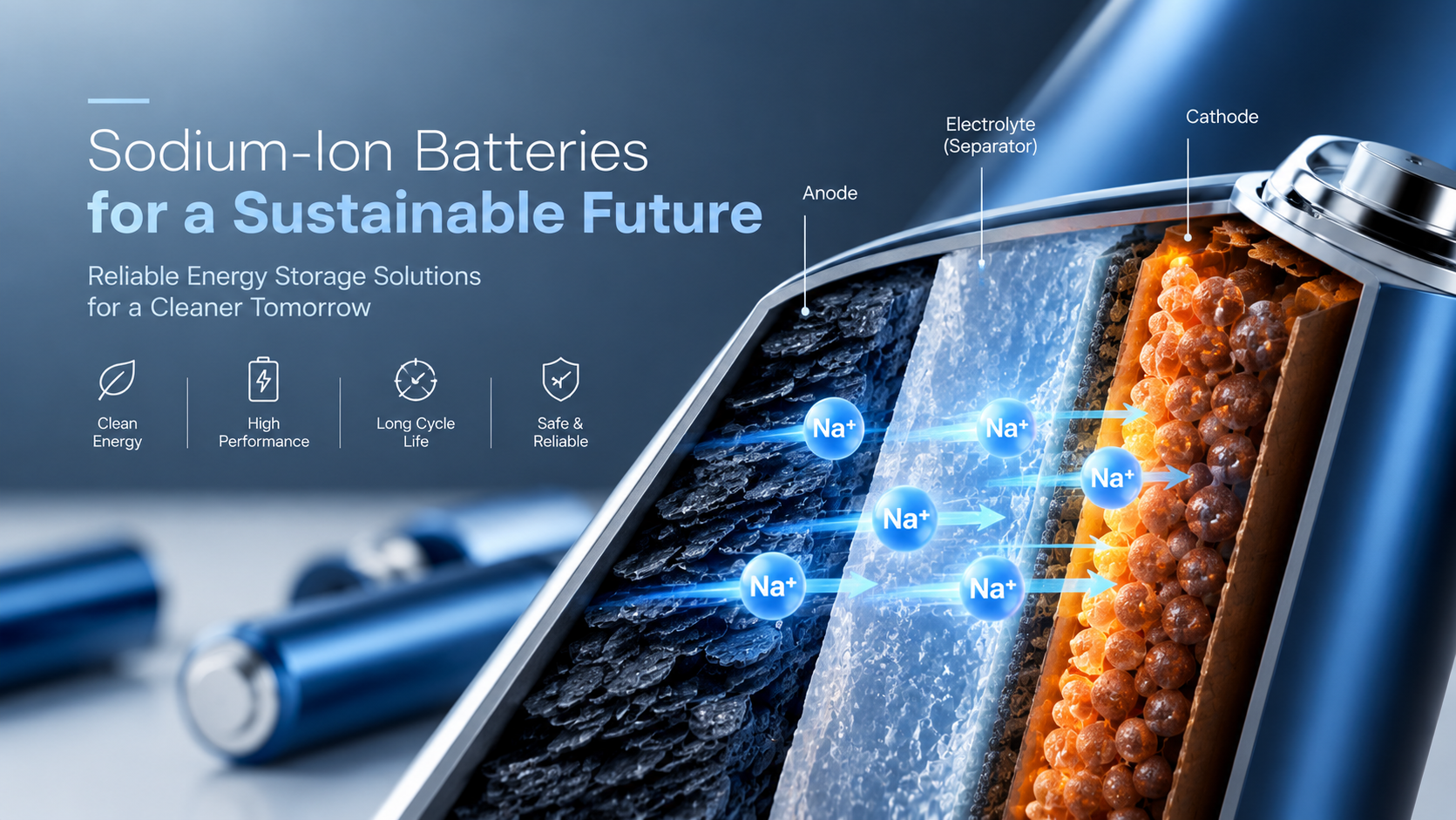
## About PKNERGYPKNERGY is a battery manufacturer and solutions provider based in Shenzhen, China. The company offers a range of battery products and energy storage solutions, including lithium-ion batteries, LiFePO4 batteries, and customized battery systems.With experience in battery manufacturing and application development, PKNERGY provides solutions for various industrial and energy storage requirements.## What Are Sodium-Ion Batteries?Sodium-ion batteries are rechargeable batteries that use sodium ions instead of lithium ions to store and release energy.As an alternative battery technology, sodium-ion batteries are attracting attention due to the availability of sodium resources and their potential for use in energy storage and power supply applications. Their low-temperature performance is also an area of interest.These characteristics are driving interest in sodium-ion technology for applications where specific operating conditions and system requirements need to be considered.## PKNERGY's Sodium-Ion Battery ProductsPKNERGY offers sodium-ion battery products in several formats to accommodate different application requirements.- 18650 cylindrical sodium-ion batteries- Cylindrical sodium-ion cells in various sizes and capacities- Prismatic sodium-ion cellsThese product formats provide options for different system configurations and equipment designs. Actual suitability depends on the specifications of each cell and the requirements of the application.## Potential ApplicationsSodium-ion batteries may be considered for a range of applications, depending on their specifications and operating conditions.- Energy Storage Systems (ESS)- Solar power and off-grid energy systems- Industrial backup power and UPS systems- Telecommunications and remote power supply- Small power devices and electronic equipmentSelecting an appropriate battery requires evaluating the electrical and environmental requirements of the intended application.## Key Considerations When Selecting a BatteryWhen selecting a sodium-ion battery, it is important to review more than just nominal voltage and capacity.Key factors include:- Rated voltage and capacity- Charge and discharge characteristics- Operating temperature range- Cycle life- Available installation space- Safety and system requirementsCompatibility with the overall system, including charging methods, output requirements, and operating conditions, should also be confirmed before implementation.## Battery Solutions for Diverse ApplicationsAs battery technologies continue to evolve, sodium-ion batteries are gaining attention as another option for energy storage and power supply systems.PKNERGY's range of battery products, including lithium-ion, LiFePO4, and sodium-ion batteries, offers options for applications with different technical requirements.For inquiries, please contact us via Contact Us or support@alphacell.co.kr.#PKNERGY #SodiumIonBattery #SodiumIon #BatteryTechnology #EnergyStorage #ESS #LiFePO4 #BatterySolutions #RenewableEnergy
TEKCELL: Industrial Lithium Primary Battery Solutions
2026.10.29 General
TEKCELL: Industrial Lithium Primary Battery Solutions
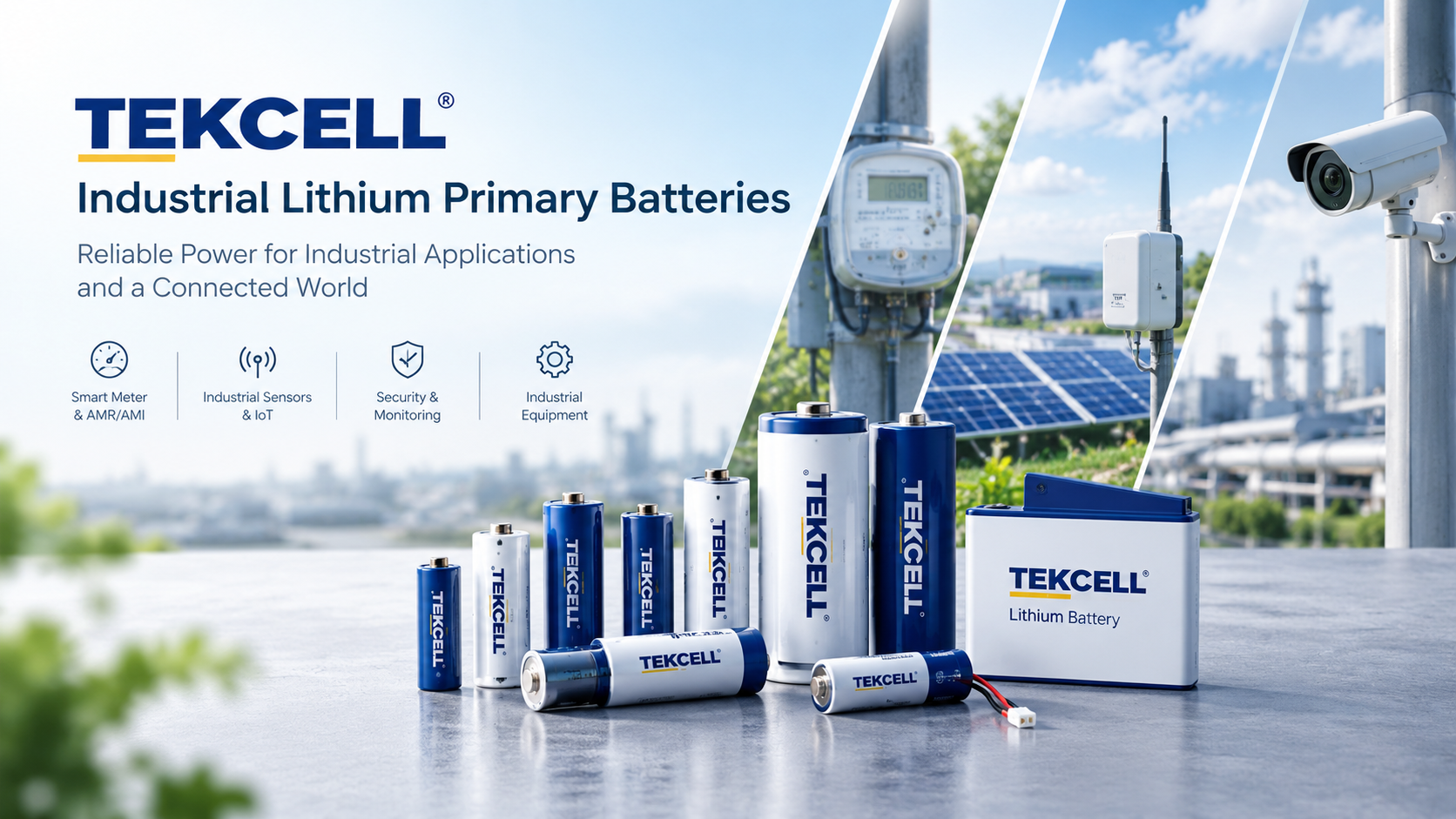
TEKCELL is a lithium primary battery brand of VITZROCELL, a South Korean battery manufacturer. Its product portfolio includes lithium primary batteries for applications that require reliable, long-term power, such as industrial equipment, meters, and security systems.Features of Industrial Lithium Primary BatteriesTEKCELL’s major product offerings include lithium thionyl chloride (Li-SOCl₂) primary batteries. These batteries are characterized by high energy density and low self-discharge, making them suitable for industrial devices that require long-term operation.Actual performance and operating conditions vary by model and application environment. The manufacturer’s latest technical documentation should be reviewed before selecting a battery.Main Product SeriesTEKCELL offers cylindrical lithium primary batteries in various sizes and capacities, including:- SB-AA02: 1/2 AA-size product series- SB-AA11: AA-size product series- SB-A01: A-size product series- SB-C02: C-size product series- SB-D02: D-size product seriesEach product differs in dimensions, capacity, and discharge characteristics. Selection should be based on the equipment’s power requirements and available installation space.Configurations with terminals or connectors may also be available, so the specifications and connection details of the specific model should be confirmed.Applications Across Industrial MarketsTEKCELL lithium primary batteries are used in a variety of applications, including:- Smart meters and electricity, gas, and water meters- Heat meters and remote meter-reading equipment- Industrial control equipment and memory backup systems- Security equipment and sensor systems- Automation systems and other industrial electronic devicesThese applications often require long-term power supply or are installed in locations where battery replacement is difficult. Selecting a battery that matches the operating environment and power consumption characteristics is therefore important.Selecting a Battery for the Intended ApplicationWhen selecting an industrial battery, it is important to consider not only nominal voltage and capacity but also continuous and pulse discharge requirements, operating temperature, expected service life, dimensions, and connector specifications.For TEKCELL products, the appropriate model should be selected by comparing the equipment’s requirements with the manufacturer’s datasheets.For product and application inquiries, please contact us via Contact Us or support@alphacell.co.kr.
XenoEnergy: A Specialist in Industrial Lithium Primary Batteries
2026.10.27 General
XenoEnergy: A Specialist in Industrial Lithium Primary Batteries
XenoEnergy Co., Ltd. is a South Korean manufacturer specializing in industrial lithium primary batteries, particularly lithium thionyl chloride (Li-SOCl₂) batteries.  Its products are designed for applications that require reliable, long-term power.1. Lithium Thionyl Chloride (Li-SOCl₂) BatteriesLi-SOCl₂ batteries are known for their high energy density, low self-discharge, and suitability for long-term operation. These characteristics make them suitable for industrial equipment and devices that require stable power over extended periods.[Product Portfolio]XenoEnergy offers a range of battery solutions, including:- Regular Batteries- Pulse Batteries- High-Temperature Batteries- Custom Battery Solutions- Lithium-Ion Hybrid CapacitorsEach product type is designed for different operating requirements. The appropriate solution depends on the application’s electrical requirements and operating conditions.[Key Applications]XenoEnergy’s industrial lithium primary batteries are suitable for applications such as:- Smart electricity, gas, and water meters- Automatic Meter Reading (AMR) and Advanced Metering Infrastructure (AMI)- Industrial sensors and remote monitoring equipment- Security systems and alarm devices- RFID and tracking devices- Memory backup systemsThese applications often require dependable power and long service life, particularly where battery replacement is difficult or costly.[Selecting the Right Battery]When selecting an industrial lithium primary battery, it is important to consider voltage, capacity, discharge requirements, operating temperature, dimensions, and expected service life.The final selection should be based on the specific requirements of the application and the manufacturer’s technical documentation.For more information about industrial battery solutions, please contact us.For inquiries, please contact us via Contact Us or support@alphacell.co.kr.#XenoEnergy #LithiumBattery #LiSOCl2 #PrimaryBattery #IndustrialBattery #SmartMeter #IoT #BatterySolutions
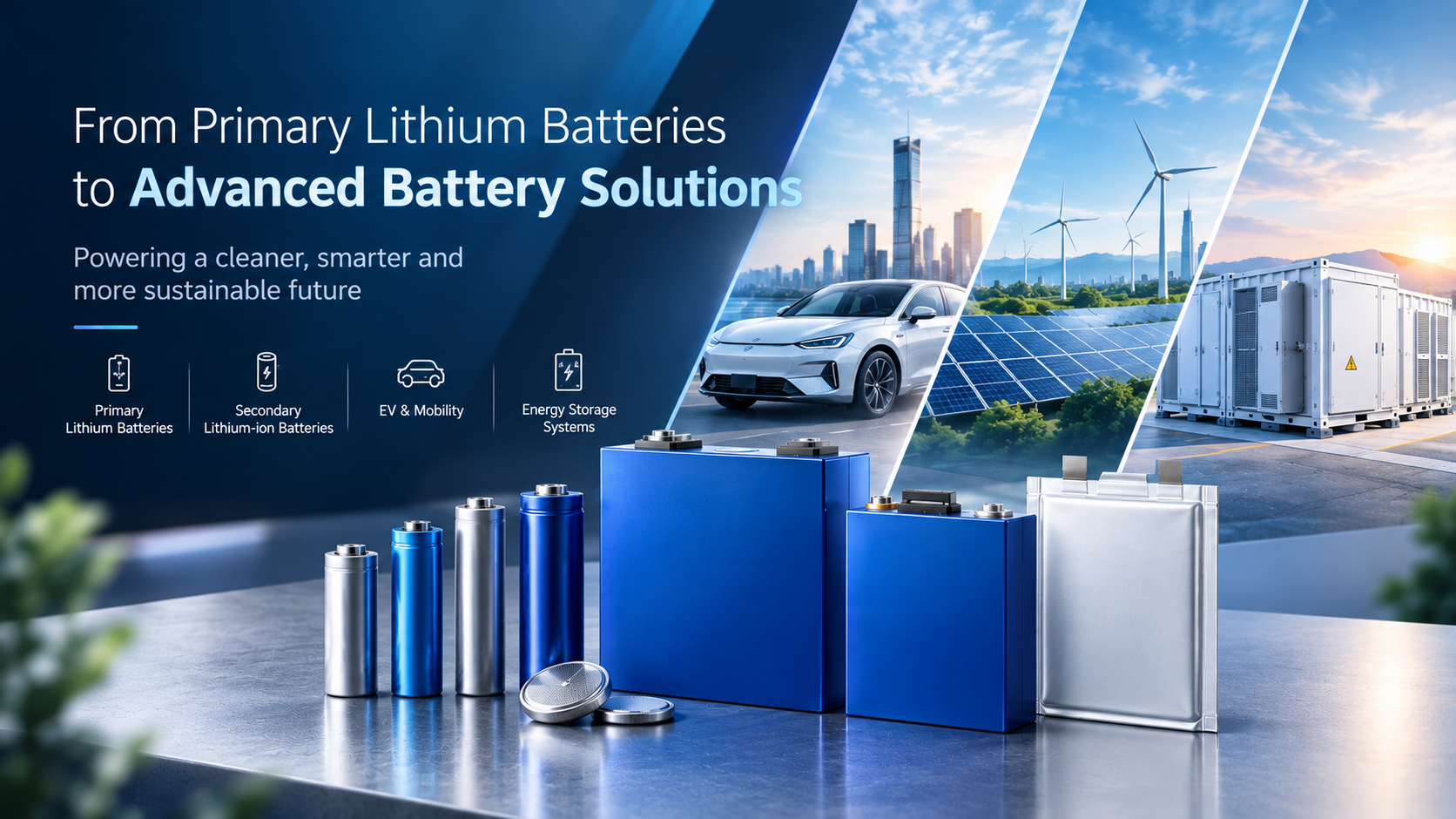
EVE Energy: From Primary Lithium Batteries to Advanced Battery Solutions
2026.10.26
EVE Energy: From Primary Lithium Batteries to Advanced Battery Solutions
 A Growing Battery Manufacturer Expanding Across Consumer, Mobility, and Energy Storage MarketsEVE Energy is a Chinese battery manufacturer with a broad portfolio spanning primary lithium batteries, rechargeable lithium-ion cells, power batteries, and energy storage solutions.Founded in 2001, the company initially focused on primary lithium batteries before expanding into consumer lithium-ion batteries, power batteries, and large-scale energy storage systems.Today, EVE offers a diverse range of battery technologies and cell formats designed for applications ranging from smart meters and electronic devices to power tools, electric vehicles, and energy storage systems.In this article, we look at EVE Energy's history, its primary and secondary battery businesses, and its major product categories.1. EVE Energy: Company History and DevelopmentEVE Energy was established in 2001 and began producing primary lithium batteries in 2003. The company was listed on the Shenzhen Stock Exchange's ChiNext market in 2009.Since then, EVE has steadily expanded its manufacturing capabilities and product portfolio, moving beyond primary batteries into rechargeable lithium-ion batteries and larger power battery systems.Key milestones in its development include:- 2001: EVE Energy was established.- 2003: Production of primary lithium batteries began.- 2007: Its primary lithium battery production base began operations.- 2009: The company was listed on the Shenzhen Stock Exchange's ChiNext market.- 2010: Production of consumer lithium-ion batteries began.- 2015: EVE entered the power battery business.- 2016: Development of high-performance cylindrical lithium-ion power batteries was initiated.- 2018: Production lines for prismatic NCM and pouch NCM cells entered operation.- 2020–2022: EVE expanded its automotive battery business and established additional partnerships with automotive manufacturers.- 2024: Its 60 GWh energy storage battery manufacturing project began production.- 2025: The company identified large cylindrical and large prismatic cells as key areas of mass-production development.This progression illustrates how EVE has developed from a primary lithium battery manufacturer into a company serving multiple segments of the global battery industry.2. Primary and Secondary Batteries: What Is the Difference?EVE's product portfolio includes both primary batteries and rechargeable secondary batteries. Although both store and deliver electrical energy, they differ in how they are used and the applications they support.[Primary Batteries — Designed for Long-Term, Non-Rechargeable Use]Primary batteries are designed for use until their stored energy is depleted. They are not intended to be recharged during normal operation.EVE's primary lithium battery portfolio includes lithium-thionyl chloride (Li-SOCl₂) and lithium-manganese dioxide (Li-MnO₂) batteries, as well as specialized battery and capacitor solutions.These batteries are suited to applications where long service life, low self-discharge, and reliable operation are important.Typical applications include:- Smart meters and utility metering equipment- Industrial monitoring and sensing devices- Security and alarm systems- Internet of Things (IoT) devices- Equipment requiring long-term, low-maintenance powerFor example, lithium-thionyl chloride batteries are commonly used in applications requiring long operating life and stable power delivery.[ Secondary Batteries — Designed for Repeated Charging and Discharging]Secondary batteries can be recharged and reused over multiple charge-discharge cycles.EVE's rechargeable battery portfolio includes small lithium-ion batteries, cylindrical cells, prismatic cells, pouch cells, and battery systems.Depending on the cell chemistry and design, these products can support applications requiring different combinations of energy capacity, power output, cycle life, and charging performance.Typical applications include:- Consumer electronics and wearable devices- Power tools and outdoor power equipment- Electric two-wheelers and other mobility applications- Electric vehicles- Industrial equipment- Energy storage systems (ESS)The choice between a primary and a secondary battery depends on the application's operating pattern, maintenance requirements, energy demand, and expected service life.3. EVE Energy's Major Product CategoriesEVE's portfolio extends beyond a single battery chemistry or cell format. Its products can be broadly organized into consumer batteries, power batteries, and energy storage solutions. ① Primary Lithium BatteriesEVE supplies primary lithium batteries for applications requiring long service life and reliable operation.Its product range includes Li-SOCl₂ and Li-MnO₂ batteries, with different cell formats and specifications available for various equipment requirements.These batteries are particularly relevant to industrial electronics, metering, sensing, and other applications where battery replacement may be difficult or infrequent.② Small Lithium-Ion and Cylindrical CellsEVE also manufactures rechargeable lithium-ion batteries for consumer electronics, power tools, and other portable equipment.Its cylindrical cell portfolio includes formats such as 18650 and 21700, with different models designed to meet varying capacity and discharge requirements.The appropriate cell depends on the intended application, including available installation space, required runtime, operating current, charging conditions, and cycle life.③ Prismatic LFP CellsLithium iron phosphate (LFP) batteries are an important part of EVE's rechargeable battery portfolio.EVE's prismatic LFP product range includes models such as LF105, LF100LA, LF230, LF304, MB31, LF235L, and LF356L, as listed in its European product catalog.These cells are relevant to applications such as energy storage systems, industrial power systems, and other battery packs requiring suitable combinations of capacity, service life, and system-level performance.However, individual models differ in dimensions, capacity, electrical characteristics, and intended applications. Selection should therefore be based on the specific product datasheet and system requirements.④ NCM and Other Power Battery CellsIn addition to LFP, EVE offers nickel-cobalt-manganese (NCM) lithium-ion cells in prismatic, pouch, and cylindrical formats.These product categories support different design requirements across automotive, mobility, and other power applications.The choice between LFP and NCM depends on the complete application design, including energy density, safety requirements, operating conditions, cycle life, cost, and pack architecture.Neither chemistry is universally suitable for every application.⑤ Large Cylindrical Cells and Energy Storage SystemsEVE has also expanded its activities in large cylindrical batteries and large-capacity energy storage cells.In the energy storage sector, the company has developed large-capacity cells intended to help reduce the number of cells and simplify battery pack and system integration.EVE announced the production launch of its 60 GWh energy storage battery manufacturing project in December 2024.The announcement also introduced its 628 Ah large-capacity energy storage cell, known as Mr. Big.These developments reflect the industry's broader move toward larger cells and more integrated battery systems for stationary energy storage.4. Where Is EVE Energy Today?EVE Energy's current business covers several connected areas of the battery value chain.Its portfolio includes primary lithium batteries, rechargeable consumer batteries, cylindrical cells, prismatic LFP and NCM cells, pouch cells, large cylindrical batteries, and energy storage solutions.This breadth allows the company to address different market requirements, from low-power devices requiring long-term operation to high-capacity battery systems used in mobility and stationary energy storage.As demand for electrification and energy storage continues to develop, cell selection is becoming increasingly application-specific.Battery capacity alone is not enough to determine suitability. Voltage, continuous and peak discharge current, charging limits, temperature range, cycle life, physical dimensions, and safety requirements must all be considered when evaluating a battery for a particular product.For battery pack developers and equipment manufacturers, reviewing the cell datasheet and confirming compatibility with the intended system are essential steps before final selection.5. Selecting the Right EVE Cell for Your ApplicationEVE's wide product range provides options for applications with different power, capacity, and operating requirements. However, the best choice depends on the intended use rather than the manufacturer or cell format alone.When evaluating a battery, it is important to consider:- Required nominal voltage and capacity- Continuous and peak discharge current- Charging method and charging time- Expected operating time and cycle life- Operating temperature and environmental conditions- Available installation space and mechanical constraints- Required protection, monitoring, and certificationFor primary batteries, long-term reliability and self-discharge characteristics may be particularly important. For rechargeable cells, charge-discharge performance, cycle life, and compatibility with the battery management system may be key considerations.Checking these requirements early can help reduce design changes and improve the suitability of the selected cell for the final product.ConclusionEVE Energy has developed from a primary lithium battery manufacturer into a diversified battery company serving consumer electronics, industrial equipment, mobility, automotive, and energy storage markets.Its product portfolio includes both non-rechargeable primary lithium batteries and rechargeable lithium-ion cells in multiple chemistries and formats.As battery applications become increasingly diverse, selecting the right cell requires more than comparing capacity or dimensions. A comprehensive evaluation of electrical performance, operating conditions, service life, and system compatibility is essential.Alphacell International supports battery selection, battery pack development and manufacturing, technical documentation review, and assistance with relevant certification requirements.If you are considering EVE cells for a new product or battery pack project, please share your application, target capacity, required output, and operating conditions. We can help review the requirements and identify suitable battery options.For inquiries, please contact us via Contact Us or support@alphacell.co.kr#EVEEnergy #EVEBattery #LithiumBattery #PrimaryBattery #SecondaryBattery #LithiumIonBattery #LFPBattery #NCMBattery #CylindricalBattery #PrismaticCell #BatteryPack #EnergyStorage #ESS #AlphacellInternational
The Evolution of Samsung SDI Cylindrical Batteries: From 18650 to 21700 and 46-Series Cells
2026.10.22 General
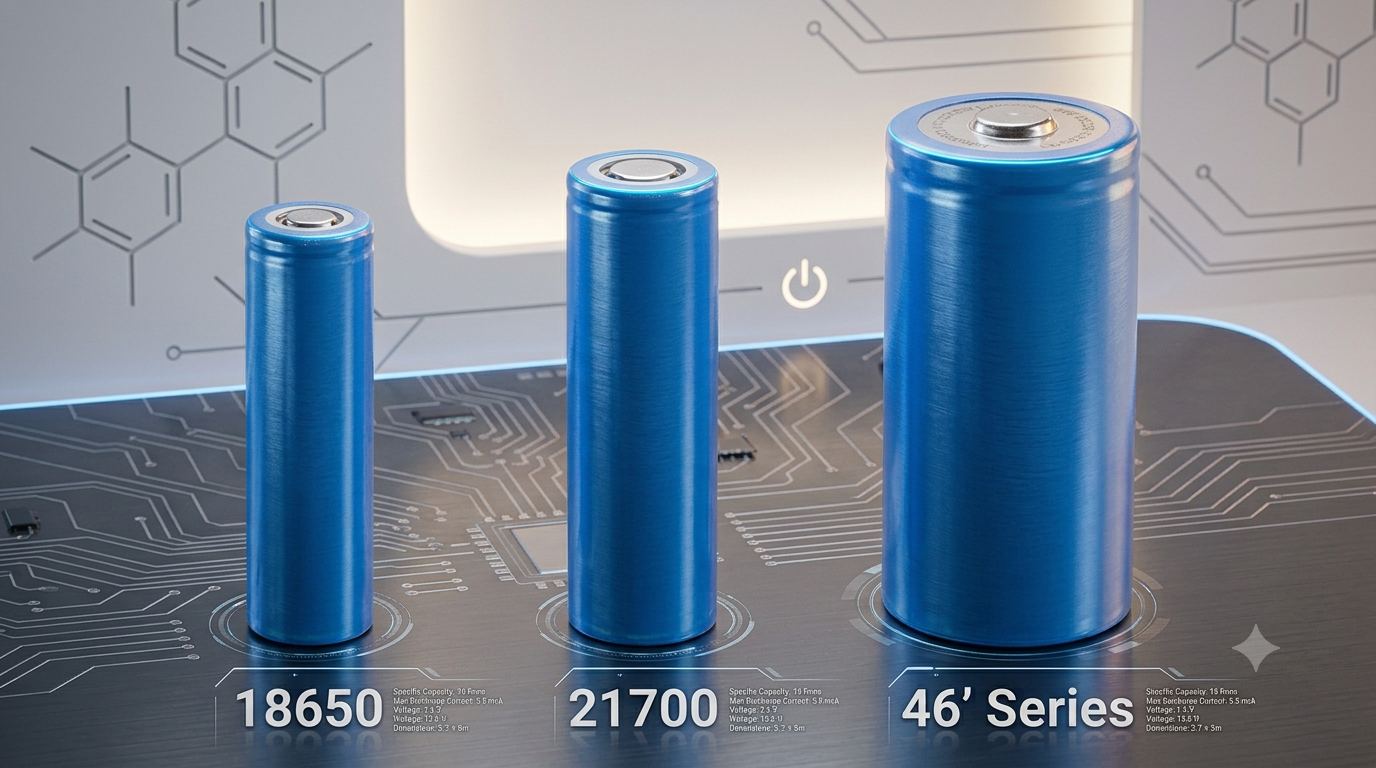
The Evolution of Samsung SDI Cylindrical Batteries: From 18650 to 21700 and 46-Series Cells
Cylindrical Lithium-Ion Batteries: Evolving to Meet Different Application RequirementsCylindrical lithium-ion batteries are widely used in applications ranging from IT devices and power tools to micromobility and electric vehicles.As their applications have expanded, the market has increasingly adopted the 21700 format alongside the established 18650 standard.More recently, larger 46-series cylindrical cells have begun entering mass production.This evolution is about more than simply increasing cell size. It also reflects the growing specialization of battery cells to meet application-specific requirements for capacity, power output, charging speed, and cycle life.In this article, we explore the key characteristics of each format and the typical applications of representative Samsung SDI cylindrical battery models.1. 18650 — The Established Cylindrical Battery StandardThe 18650 is a cylindrical cell measuring approximately 18 mm in diameter and 65 mm in height. It has long served as a standard format in the cylindrical lithium-ion battery market.18650 cells have been used in a wide range of applications, including laptops, IT devices, small electronic products, and various battery packs. Samsung SDI's 18650 product portfolio includes models such as the 30Q, 25R, and 25S, which are widely associated with applications requiring high power output, including power tools.Its standardized dimensions offer practical advantages, including relatively straightforward cell sourcing and battery pack design.2. 21700 — A Key Format with Application-Specific PerformanceThe 21700 format measures approximately 21 mm in diameter and 70 mm in height.Compared with 18650 cells, its larger size allows for greater capacity and power potential per cell, making it an important format for power tools and micromobility applications.Samsung SDI's 21700 product portfolio can be broadly categorized by application requirements, as shown below.CategoryRepresentative ModelsTypical Applications and CharacteristicsHigh power output40T, 45T, 50SPower tools and equipment requiring high discharge currentHigh capacity50G, 53G, 58EE-bikes, electric scooters, and outdoor power equipment (OPE)Fast charging and cycle life48XMicromobility and industrial equipment where charging time and frequent cycling are importantEven within the same 21700 format, discharge performance, capacity, and cycle life can vary significantly between models. Selecting the right cell therefore requires careful consideration of the application's operating conditions and usage patterns.3. 46-Series Cells — A New Generation of Larger Cylindrical BatteriesHow Do 46-Series Cells Differ from 21700?46-series cylindrical batteries are based on a diameter of 46 mm and represent a larger cell format designed to improve energy capacity and battery pack integration.The diameter increases from 21 mm to 46 mm, more than doubling the cell's diameter compared with the 21700 format.Key potential advantages include:- Higher energy capacity per cell:  A single cell can store substantially more energy than a 21700 cell.    Industry comparisons often cite approximately six  times the energy capacity, depending on the specific cell designs being compared.- Fewer cells per battery pack:  Fewer cells may be required to achieve the same total energy capacity, potentially reducing the number of cell connections.- Improved pack integration and assembly efficiency :A lower cell count can help simplify pack architecture and reduce the complexity of interconnections and assembly processes.In March 2025, Samsung SDI announced that it had begun mass production of its 4695 cylindrical battery, measuring 46 mm in diameter and 95 mm in height.The company reported that initial supplies had begun for a U.S. customer for micromobility applications, with plans to expand into the electric vehicle market in the future.46-series batteries are expected to find broader applications in areas requiring high energy capacity and efficient system integration, including electric vehicles, electric two-wheelers, and portable power systems.4. The Key to Choosing a Battery Format Is Application FitEach cylindrical battery format offers different advantages depending on the product's requirements.FormatKey CharacteristicsTypical Applications18650Established, standardized, versatile formatIT devices, power tools, and compact battery packs21700Application-specific options for high power, high capacity, and fast chargingPower tools, micromobility, and industrial equipment46-seriesLarger cells with potential advantages in pack integration and energy capacityMicromobility, electric vehicles, and higher-capacity battery systemsHowever, larger cells are not necessarily the best choice for every product.Battery selection requires a comprehensive assessment of power consumption, required capacity, discharge current, charging conditions, available installation space, and expected service life.The optimal format and model depend on how these factors interact within the intended application.Looking for the Right Cylindrical Battery for Your Application?Alphacell International supports cylindrical battery cell selection and application evaluation based on customers' product requirements and technical specifications.If you are sourcing cells for power tools, micromobility products, outdoor power equipment, or industrial applications please share your target capacity, required power output, operating time, or existing battery model.Our team can review the relevant specifications and recommend suitable products based on your application requirements.For inquiries, please contact us via Contact Us or support@alphacell.co.kr.Thank you#CylindricalBattery #LithiumIonBattery #BatteryCell #18650 #21700 #46Series #4695 #SamsungSDI #PowerTools #Micromobility #BatteryPack #AlphacellInternational
Battery Passports to Become Mandatory in 2027: What Battery Companies Need to Prepare Now
2026.10.22 General
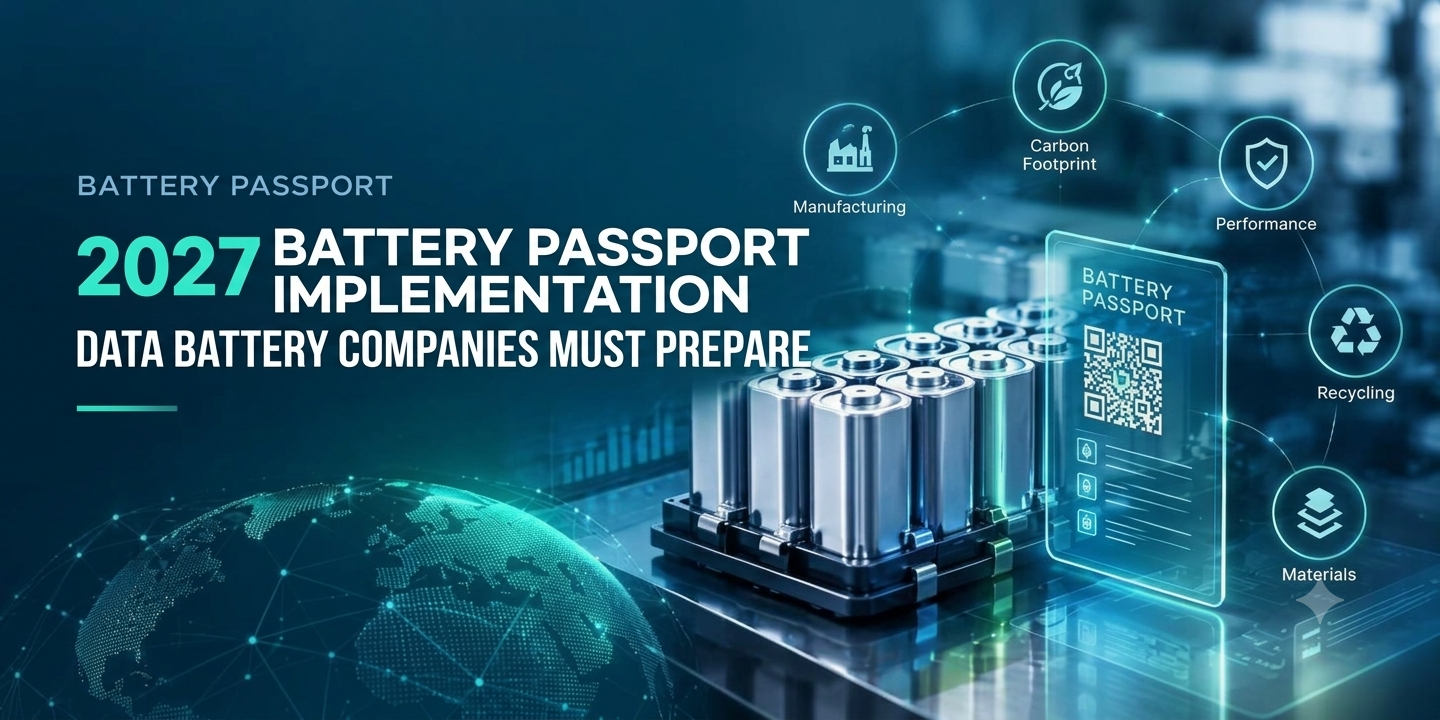
Battery Passports to Become Mandatory in 2027: What Battery Companies Need to Prepare Now
The European Union (EU) is expanding battery regulations beyond product performance and safety to cover information throughout a battery's entire life cycle, including carbon emissions, raw materials, production, and usage history.In particular, from February 18, 2027, battery passports will become mandatory for certain categories of batteries.Companies involved in batteries and battery packs connected to the European market should therefore begin preparing the necessary data and management systems in advance.1. What Is a Battery Passport?A Battery Passport is a digital record that provides access to key information about a battery.Under the EU Batteries Regulation (Regulation (EU) 2023/1542), battery passports will be required from February 18, 2027, for the following categories of batteries placed on the EU market or put into service:- Electric vehicle (EV) batteries- Light means of transport (LMT) batteries- Industrial batteries with a capacity greater than 2 kWhA Battery Passport may contain information about both the battery model and individual batteries. Access is provided through a unique identifier linked to a QR code.However, not all information is publicly accessible. Access rights are differentiated according to the nature of the data, including information available to the general public, information accessible to notified bodies and market surveillance authorities, and information available to operators with legitimate interests.2. Why Is Carbon Footprint Data Becoming More Important?The EU Batteries Regulation identifies carbon footprint as an important element of battery management.The assessment goes beyond emissions generated during battery manufacturing. It also considers the total energy delivered over the battery's expected service life, with carbon footprint information managed across relevant life-cycle stages.For batteries subject to the applicable requirements, the regulatory framework is also progressing toward the application of carbon footprint performance classes.As a result, battery manufacturers need more than the ability to manufacture products. They must also establish systems to trace, collect, and calculate environmental data associated with raw materials and manufacturing processes.3. What Information Will a Battery Passport Contain?In August 2026, the European Commission published guidance to support Battery Passport preparation, outlining a total of 71 data points related to the Battery Passport framework.The specific data requirements vary depending on the battery category and the nature of the information. However, a Battery Passport may include the following types of information:- Manufacturer and battery model information- Manufacturing facility and production information- Battery carbon footprint- Battery performance and durability data- Raw materials and composition information- Recycling and reuse information- Battery condition and usage-related information- Regulatory compliance and conformity informationThe EU framework also establishes data access and management requirements to support the use of Battery Passport information during battery reuse, remanufacturing, and recycling.4. What Should Battery Companies Prepare Now?The Battery Passport is not simply about creating new data when the requirements take effect in 2027. The key is to establish a systematic approach to collecting, organizing, and managing data generated throughout product development and manufacturing.For battery and battery pack development, companies should identify in advance where the required information originates, who is responsible for managing it, and how it can be provided to customers.(1) Product InformationCell and pack models, specifications, manufacturers, and manufacturing facilities.(2) Raw Materials and CompositionInformation on key materials and components used in batteries.(3) Environmental DataCarbon footprint data and environmental information associated with raw materials and manufacturing processes.(4) Performance and Lifetime DataCapacity, performance, durability, and battery condition data.(5) Regulatory Compliance DocumentationConformity documentation, hazardous substance information, and other materials required to address applicable EU regulations.Ultimately, in the battery industry, the ability to provide and trace reliable product data is becoming an increasingly important competitive factor alongside technical product specifications.5. Why Should Companies Start Preparing Before 2027?Materials published by the Korea Battery Industry Association also emphasize the importance of carbon footprint calculations and obtaining environmental data related to hazardous substance analysis ahead of Battery Passport implementation.In addition, customer requests for carbon emissions and hazardous substance data are extending beyond battery manufacturers to their suppliers, even before the regulations take effect.Companies within the scope of the Battery Passport requirements should not wait until the implementation deadline to prepare their data. Instead, they should evaluate how the necessary information will be collected and managed from the product development and manufacturing stages onward.For battery packs in particular, data requirements may extend beyond the cells themselves to include pack components and manufacturing processes. Organizing technical documentation and environmental and regulatory data from the development stage can help companies respond more effectively to future customer requirements.The regulatory direction of the battery industry is shifting beyond product safety and performance toward data-driven management of product history and environmental information.With mandatory Battery Passports approaching in 2027, companies connected to the European market should begin identifying the data required for their products and preparing a data management framework that covers the entire chain:Raw Materials → Manufacturing → Performance → Environmental Information → Reuse and RecyclingAlphacell International Co., Ltd. supports battery product development through a range of services, including battery selection, battery pack development and manufacturing, technical documentation review, and support for relevant certification and regulatory requirements.For inquiries, please contact us via Contact Us or support@alphacell.co.kr.#BatteryPassport #EUBatteriesRegulation #BatteryRegulations #BatteryIndustry #CarbonFootprint #BatteryData #BatteryPack #SecondaryBatteries #Alphacell #ElectronicComponents #BatteryPackDevelopment

06/07
Close